What to Look for in Sheets if You Have Eczema (And Why Fabric Matters More Than You Think)
TL;DR: The best sheets for eczema and sensitive skin are hypoallergenic, breathable, and free from harsh chemicals. Bamboo viscose sheets check all these boxes, offering an ultra-smooth fiber structure that reduces friction and irritation. Shop Pure Fiber bamboo viscose sheets.
If you or a loved one lives with eczema (atopic dermatitis), you know that the quest for relief is a 24/7 effort. While much of the focus is on skincare routines and laundry detergents, one of the most critical factors is often overlooked: your bedding.
You spend a third of your life in direct contact with your sheets. The fabric you choose can either soothe sensitive skin or exacerbate irritation, itching, and redness. In this guide, we will explore what to look for when choosing bedding for eczema-prone skin and why so many people are making the switch to bamboo viscose sheets.
Why Bedding Matters for Eczema
Eczema compromises the skin's natural barrier, making it highly sensitive to friction, heat, moisture, and chemical irritants. During the night, your body naturally fluctuates in temperature and sheds dead skin cells. If your bedding traps heat and sweat, or if the fabric is rough, it creates the perfect storm for a flare-up.
When shopping for bedding that will not irritate sensitive skin, there are three primary factors to consider: friction, breathability, and chemical safety.
1. The Importance of a Smooth Fiber Structure (Reducing Friction)
Friction is the enemy of eczema. Fabrics with rough or uneven fiber structures act like microscopic sandpaper against compromised skin. This is why wool and certain synthetic blends are often unbearable for those with sensitive skin.
Even standard cotton can be problematic. While cotton is natural, its fibers can be relatively short and coarse, leading to a slightly abrasive texture that grips the skin as you move in your sleep.
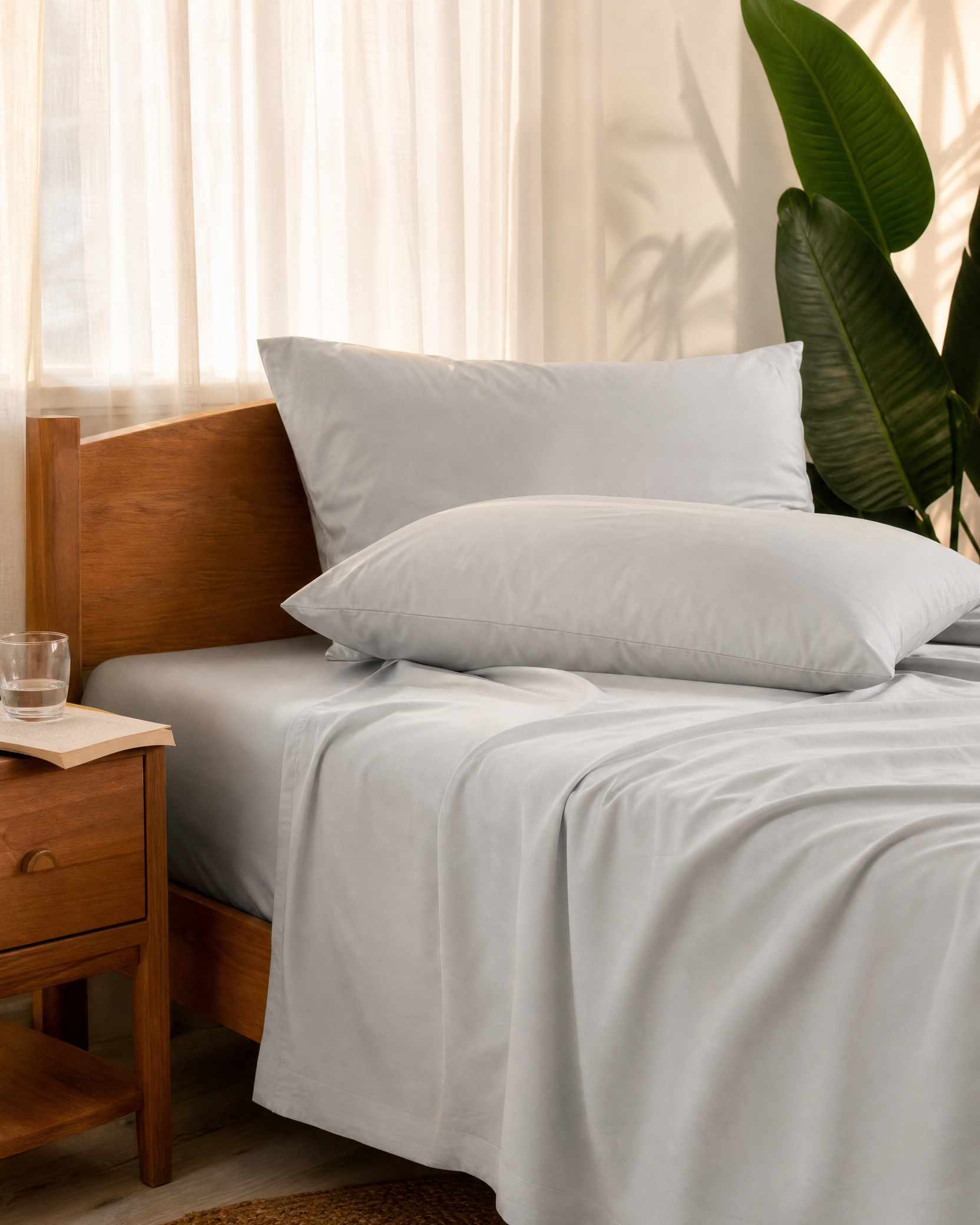
The Bamboo Viscose Difference: Bamboo viscose is celebrated for its incredibly smooth, round fiber structure. It drapes fluidly and glides across the skin rather than rubbing against it. This reduction in friction is why many people with eczema, psoriasis, and general skin sensitivities prefer bamboo viscose sheets and bamboo viscose pillowcases.
2. Breathability and Moisture Management
Heat and sweat are common triggers for eczema flare-ups. When you become too warm under the covers, your skin sweats. If your sheets do not breathe or wick moisture effectively, that sweat stays trapped against your skin, leading to itching and irritation.
Synthetic fabrics like microfiber or polyester are essentially woven plastics. They trap body heat and do not absorb moisture well, making them a poor choice for anyone dealing with skin conditions.
The Bamboo Viscose Difference: Bamboo viscose is naturally micro-porous, meaning it allows air to flow freely and heat to escape. Furthermore, it is highly absorbent, pulling moisture away from the body and allowing it to evaporate quickly. This natural temperature regulation helps keep the skin dry and cool, reducing the likelihood of heat-induced itching.
3. Chemical Safety and Hypoallergenic Properties
People with eczema must be vigilant about the chemicals their skin comes into contact with. Many conventional bedding options are treated with formaldehyde, heavy metals, and harsh dyes to make them wrinkle-free or vibrant in color. These residual chemicals can trigger severe reactions.
Additionally, dust mites are a common allergen that can worsen eczema symptoms. Bedding that harbors dust mites can turn a peaceful night's sleep into an itchy nightmare.
The Bamboo Viscose Difference: Bamboo viscose is naturally hypoallergenic and less hospitable to dust mites than traditional cotton. More importantly, when shopping for any bedding, you should look for the OEKO-TEX Standard 100 certification. At Pure Fiber, our bamboo viscose sheets are OEKO-TEX certified, meaning they have been rigorously tested and proven free from over 100 harmful substances.
What to Look For: A Quick Checklist
When evaluating the best sheets for eczema or sensitive skin, keep this checklist in mind:
- Is it hypoallergenic? Look for materials that naturally resist allergens and dust mites.
- Is the fiber structure smooth? Avoid rough weaves; seek out silky, fluid drapes that minimize friction.
- Does it breathe? Avoid synthetics like microfiber; choose natural or semi-synthetic fibers that wick moisture.
- Is it certified safe? Always look for the OEKO-TEX Standard 100 label to ensure the fabric is free from harsh chemicals.
Caring for Eczema-Friendly Bedding
Even the best bedding needs proper care to remain safe for sensitive skin. Always wash your bedding every one to two weeks using a gentle, fragrance-free, and dye-free laundry detergent. Avoid liquid fabric softeners and dryer sheets, as these leave a chemical coating on the fabric that can irritate the skin and reduce the material's natural breathability.
The Verdict on Bamboo Viscose
While no fabric can cure eczema, choosing the right bedding can significantly improve your comfort and sleep quality. By prioritizing smooth fiber structures, exceptional breathability, and chemical safety, you can create a sleep environment that supports your skin rather than irritating it.
With its natural hypoallergenic properties, silky-smooth feel, and OEKO-TEX certification, bamboo viscose is widely considered one of the gentlest fabrics available for sensitive skin.
Ready to create a more soothing sleep environment? Explore Pure Fiber's collection of OEKO-TEX certified bamboo viscose sheets today.
FAQ
Are bamboo viscose sheets good for eczema?+
Yes, many people with eczema prefer bamboo viscose sheets. The fabric is naturally hypoallergenic, highly breathable, and has a smooth fiber structure that reduces friction against sensitive skin.
What is the worst fabric for eczema?+
Rough fabrics like wool and non-breathable synthetic fabrics like polyester and microfiber are generally considered the worst for eczema, as they can cause friction and trap heat and sweat against the skin.
Why is OEKO-TEX certification important for sensitive skin?+
The OEKO-TEX Standard 100 certification guarantees that a textile has been tested for harmful substances and is safe from a human-ecological perspective. This is crucial for sensitive skin, as residual chemicals and dyes can trigger flare-ups.