Duvet Cover vs. Comforter: What's the Difference and Which Do You Need?
TL;DR: A comforter is a single finished piece of bedding you use as-is. A duvet cover is a removable fabric shell that goes over an insert or an existing comforter, much like a giant pillowcase. Choose a comforter if you want the simplest possible bed. Choose a duvet cover if you want to change the look of your bed, wash the outer layer easily, or upgrade how your bedding feels without replacing the fill underneath.
If you have ever stood in the bedding aisle wondering why some blankets come with a cover and others do not, you are not alone. Duvet covers and comforters look nearly identical once the bed is made, which is exactly why the difference is so easy to miss.
The distinction matters more than it first appears. It affects how often you do laundry, how easily you can restyle your bedroom, and how much you spend the next time you want your bed to feel new. This guide walks through how each one works, what shams have to do with it, and how to decide which belongs on your bed.
Duvet Cover vs. Comforter at a Glance
| What matters to you | Duvet cover | Comforter |
|---|---|---|
| What it is | A removable fabric shell for an insert or comforter | A single finished piece with the fill sewn inside |
| Setup | Requires an insert or comforter to go inside | Ready to use straight out of the package |
| Washing | Remove the cover and machine wash it on its own | Wash the entire piece, which can be bulky |
| Changing the look | Swap covers seasonally without replacing the fill | Requires buying a whole new comforter |
| Best for | Sleepers who want flexibility and easier laundry | Sleepers who want the fewest possible steps |
What Is a Duvet Cover?
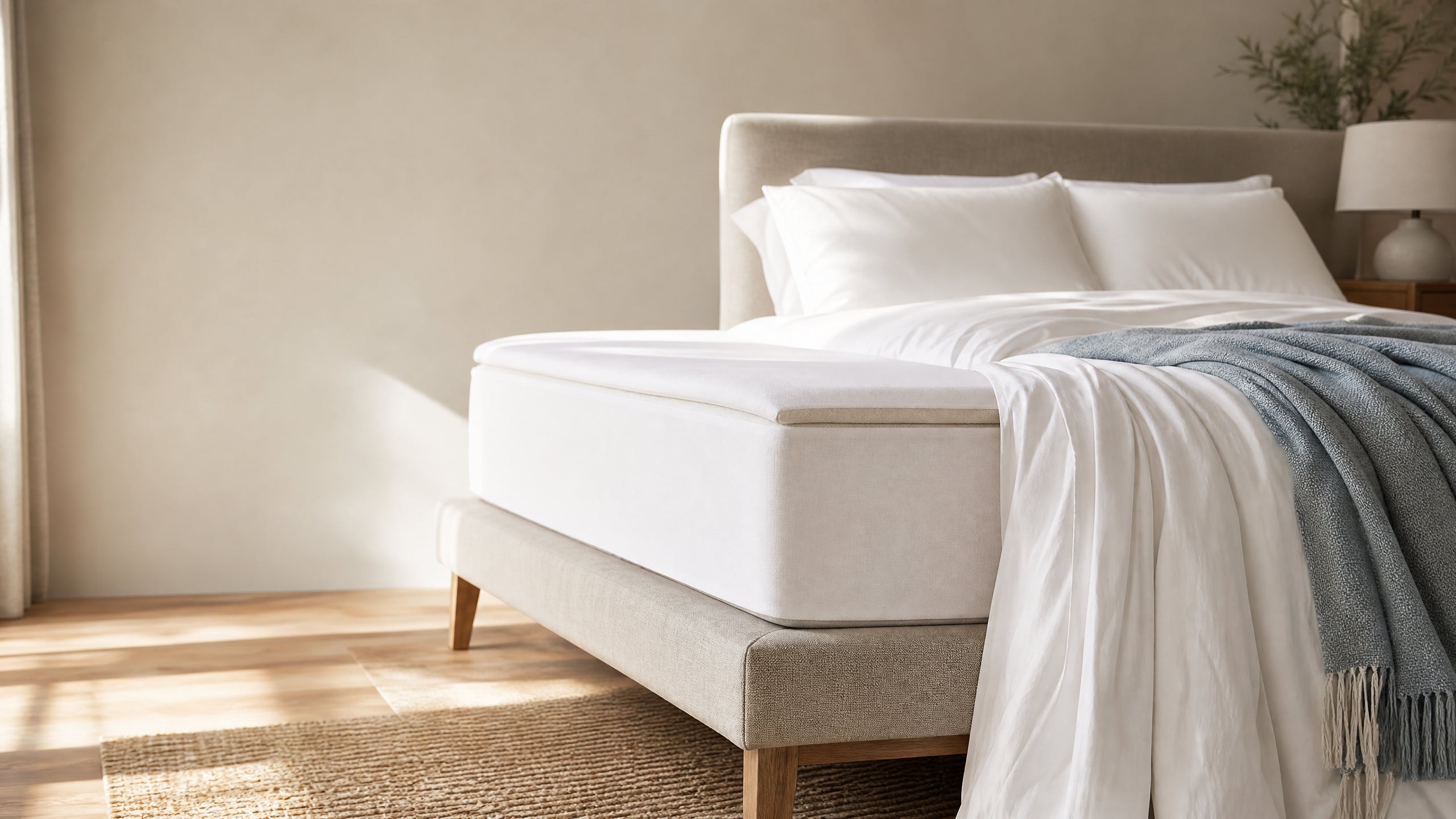
A duvet cover is a fabric shell that slips over a duvet insert or comforter and closes at one end. The easiest way to picture it is as a pillowcase scaled up to the size of your bed. The insert supplies the warmth and loft; the cover supplies everything you actually see and touch.
That split is the whole point. Because the cover is the only part in contact with your skin, it determines how your bed feels at night. And because it comes off, it is the only part that needs regular laundering — a meaningful difference when the alternative is wrestling a full comforter into a home washing machine.
Pure Fiber's Bamboo Viscose Duvet Cover + 2 Shams Set and Two-Tone Bamboo Viscose Duvet Cover + 2 Shams Set are both made from bamboo viscose, the same material family as our sheets, with the smooth surface and fluid drape that comes with it. If you are unsure which size to order, our duvet cover size guide walks through matching your insert, your mattress, and how much drape you want over the sides.
What Is a Comforter?
A comforter is a finished piece of bedding with the fill already sewn inside, usually held in place by stitched channels or box quilting so it does not shift and bunch. It is designed to be used as-is, with no cover required.
The appeal is simplicity. You buy it, you put it on the bed, and you are done. There is no insert to source separately and no assembly step. For a guest room, a first apartment, or anyone who would rather not think about bedding at all, that is a genuine advantage.
The trade-offs show up later. Washing a comforter often means a trip to a laundromat with a larger machine. And when you eventually want a different look, or the outer fabric starts to show wear, the fill goes out with it — even if the fill itself is still perfectly good.
So What Are Shams?
Shams are decorative pillow covers. They are made from the same fabric as the duvet cover so the bed reads as one coordinated piece, and they typically slip over the pillows you already sleep on or over separate decorative inserts.
The distinction people miss: shams are styling pieces, while pillowcases are for sleeping. A sham finishes the look of a made bed; a pillowcase is what your face is actually against for eight hours. Most beds use both — shams layered at the back, sleeping pillowcases in front or tucked underneath.
This is why our duvet cover sets include two shams. It means the visible top layer of your bed matches without hunting for coordinating pieces later. Your sleeping pillowcases are a separate consideration, and our guide to Standard vs. King pillowcase sizes covers how to get that fit right.
Which Should You Choose?
Choose a comforter if you want the shortest path to a made bed, you do not plan to change your bedroom's look often, and you have access to a machine large enough to wash it.
Choose a duvet cover if any of the following sound like you:
- You want to wash your top layer as often as your sheets, without a laundromat trip
- You like changing the look of your bedroom seasonally
- You already own a comforter or insert whose warmth you like but whose fabric you do not
- You want the surface you touch to feel like your sheets rather than like a separate material
That last point is worth sitting with. A duvet cover lets you keep the fill you already have and change only the part that touches you. If you have a comforter that keeps you at the right temperature but feels rough or noisy, a cover solves the problem without replacing anything underneath.
How to Care for a Bamboo Viscose Duvet Cover
Always start with the care label on the product you own. For Pure Fiber bamboo viscose bedding, the routine is straightforward: machine wash in cold water and tumble dry on low. Skip bleach and fabric softener, both of which can be harsh on the fibers and the finish over time.
Because the cover comes off, you can launder it on roughly the same schedule as your sheets. Washing on a gentle cycle and avoiding an overcrowded drum also reduces the friction that leads to surface wear — our guide to why sheets pill goes deeper on that, and the same principles apply to duvet covers.
Building the Whole Bed
A duvet cover is the top layer, not the whole system. Underneath it sits your insert or comforter, and beneath that, the sheets you actually sleep against.
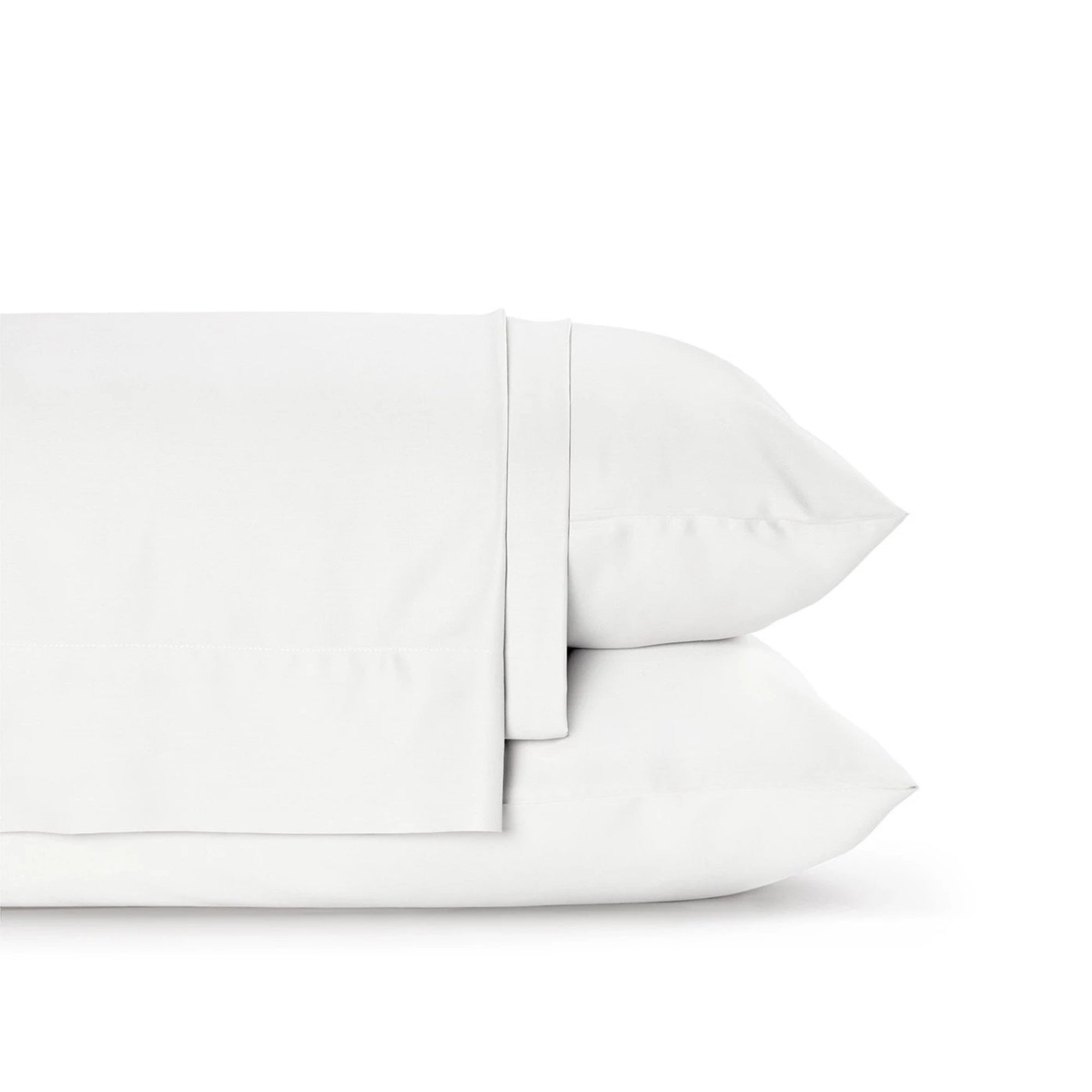
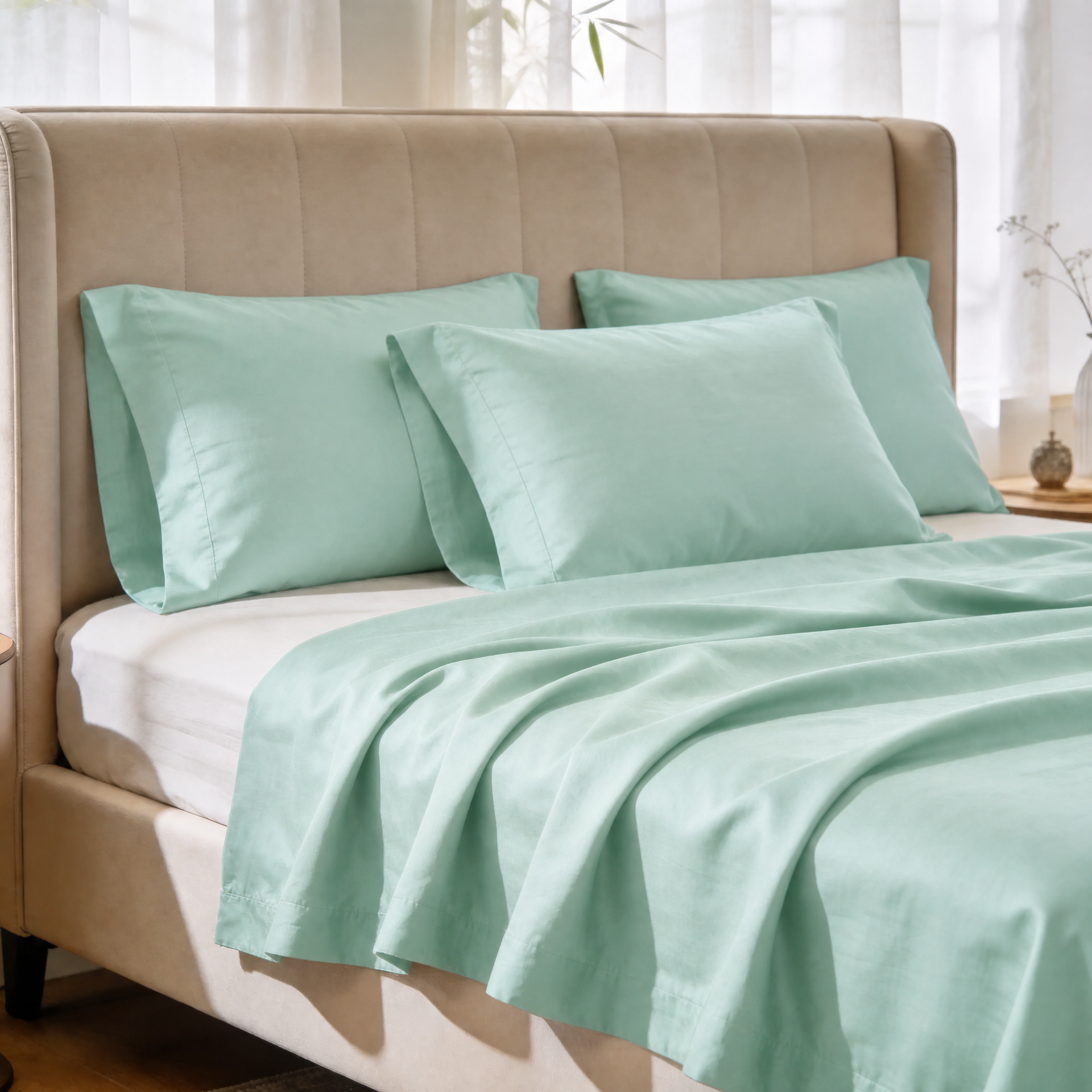
Our Bamboo Viscose Sheets Set is made from 100% bamboo viscose (rayon from bamboo viscose) in a lightweight 250-thread-count twill weave, and each set includes a fitted sheet, a flat sheet, and two pillowcases in Queen, King, and California King. Pairing it with a bamboo viscose duvet cover means every surface your skin meets is the same material, which is the simplest way to make a bed feel considered rather than assembled.
If you want to add sleeping pillowcases beyond what comes in the sheet set, the Bamboo Viscose Pillowcase Set matches. And if you are still deciding on color before you commit, our guide to choosing bed sheet colors is a useful place to start.
Frequently Asked Questions
Can I put a duvet cover over a comforter I already own?
Yes, and it is one of the most practical reasons to buy one. As long as the sizes are reasonably close, a duvet cover will slip over an existing comforter and change how the top of your bed looks and feels without replacing the fill.
Do I need a duvet insert if I buy a duvet cover?
You need something inside it — either a duvet insert or a comforter you already have. A duvet cover on its own is a fabric shell and will not provide warmth by itself.
How often should I wash a duvet cover?
Many people launder theirs on a similar schedule to their sheets, which is one of the main reasons to choose a cover over a bare comforter. Follow the care instructions on your specific product.
Are shams the same as pillowcases?
No. Shams are decorative covers meant to coordinate with your duvet cover and finish the look of a made bed. Pillowcases are what you sleep on. Most made beds use both.
What size duvet cover should I order?
Match it to your insert and to how much drape you want over the sides of the mattress rather than to your mattress size alone. Our duvet cover size guide walks through the measurements step by step.
Explore Pure Fiber bamboo viscose bedding and build a bed that feels the same from the sheets up.